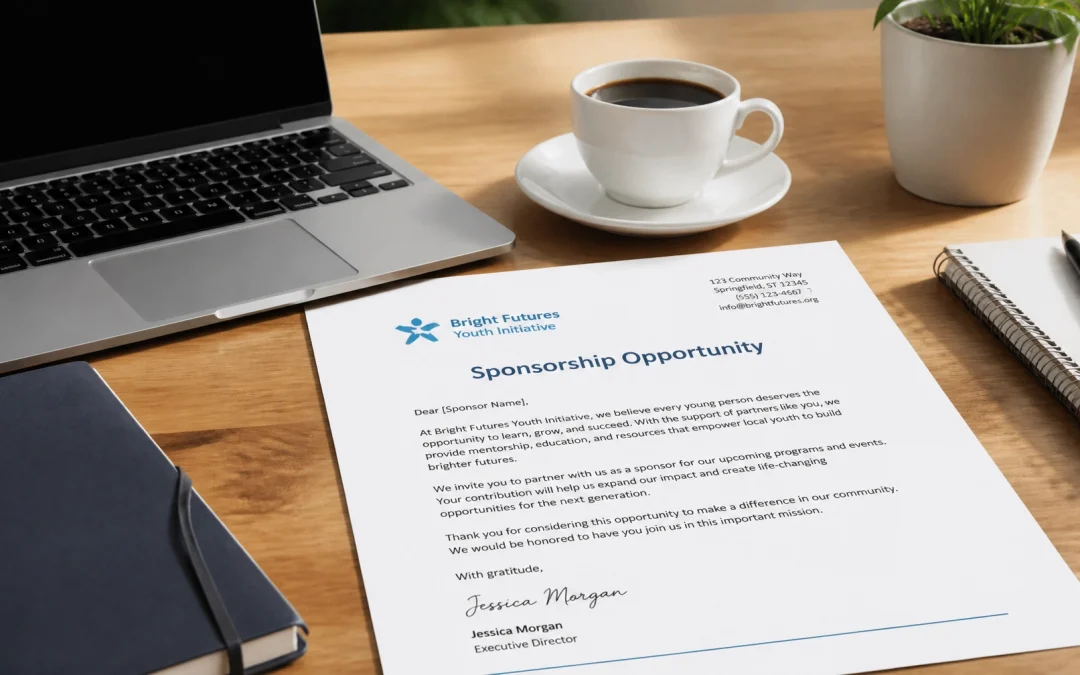
In the competitive landscape of nonprofit fundraising, the difference between a successful campaign and an overlooked one often rests in the quality of initial outreach. Organizations frequently struggle to secure corporate partnerships not due to a lack of mission, but because of technical oversights in their communication strategies.
Brian Pruett, Co-Founder of B's Charitable Pursuits and Resources, brings over 31 years of high-level experience in sales, marketing, and fundraising to the field. Throughout his career, he has observed that many local nonprofits and small businesses fail to bridge the gap between "asking for help" and "offering a partnership." This professional analysis identifies the seven most critical errors made in sponsorship letters and provides data-backed solutions to optimize fundraising event management and sponsorship acquisition.
1. The "To Whom It May Concern" Trap
Efficiency in bulk mailing often leads to a significant loss in personalization. Addressing a letter to a generic title or "To Whom It May Concern" indicates a lack of research and respect for the recipient’s time. In the corporate sector, a sponsorship letter for nonprofit organizations that is not addressed to a specific decision-maker, such as a Marketing Director or a Community Relations Manager, is statistically more likely to be discarded immediately.
The Fix:
Dedicate time to identifying the specific individual responsible for corporate social responsibility (CSR) or local marketing. Utilize LinkedIn, company websites, or direct phone inquiries to confirm names and titles.
- Actionable Advice: Address the letter to a human being. A simple "Dear Mr. [Last Name]" or "Dear [First Name]" transforms a mass-mailed flyer into a professional correspondence.

2. Being a "Grocery List" of Needs
A common strategic error is focusing exclusively on what the nonprofit needs (e.g., "We need $5,000 for a new playground"). While the need may be genuine, this approach frames the interaction as a one-way transaction of charity rather than a mutually beneficial business partnership. Sponsors, particularly small businesses, are looking for strategic alignment and brand value.
The Fix:
Reframe the narrative from "What we need" to "What we can achieve together." Shift the focus to the impact the sponsor's contribution will have on the community and how it aligns with their business goals.
- Actionable Advice: Instead of saying, "We need funding for our annual gala," use, "By partnering with us for our annual gala, you will help provide 500 local students with essential school supplies while positioning your brand as a leader in community support."
3. The Vague Ask
Ambiguity is the enemy of action. Many organizations describe their event and mission in detail but fail to specify exactly what they are requesting from the potential sponsor. This leaves the recipient guessing and creates unnecessary friction in the decision-making process. Learning how to get sponsorships for a fundraiser requires clarity and precision in the request.
The Fix:
Be explicit. State the specific dollar amount or sponsorship tier you are requesting. Provide a clear menu of options that allows the sponsor to see exactly where they fit.
- Actionable Advice: "We are seeking a Title Sponsor at the $2,500 level to anchor this event. This investment includes [specific benefits]."
4. Forgetting the "Why" (The Emotional Hook)
While the technical aspects of a letter are vital, a purely clinical request lacks the emotional resonance required to inspire partnership. Data is necessary for credibility, but stories drive engagement. If the "Why" behind the event is missing, the sponsor may not feel an emotional connection to the cause.
The Fix:
Incorporate a brief, powerful anecdote or a single, impactful statistic that humanizes the mission. Connect the sponsor’s brand to a tangible community outcome.
- Actionable Advice: "Last year, your support helped us provide 1,200 meals to families in need. This year, with your partnership, we aim to double that impact."

5. No "What's In It For Them" (Ignoring Branding Benefits)
Small businesses are often the backbone of community fundraising, but they must also answer to their own bottom lines. A letter that fails to outline the marketing and branding benefits for the sponsor is missing a key component of professional fundraising event management.
The Fix:
Outline specific branding opportunities. This includes logo placement on event materials, social media mentions, and physical presence at the event. Brian Pruett emphasizes that connecting small businesses with the community through unique branding chances is a foundational pillar of B's Charitable Pursuits and Resources.
- Actionable Advice: Create a bulleted list of "Sponsor Perks," such as:
- Logo placement on all digital and print marketing materials.
- Three dedicated social media posts reaching an audience of 5,000+.
- On-site activation booth at the event for direct community engagement.

6. The "Wall of Text"
Readability is a technical requirement for any professional document. If a letter consists of dense, multi-sentence paragraphs with no visual breaks, the recipient is unlikely to read it in its entirety. Professional communication must be scannable and direct.
The Fix:
Utilize headers, bullet points, and bold text to highlight key information. Keep paragraphs short, no more than three to four sentences. Ensure the formatting is clean and professional.
- Actionable Advice: Use bolding for your "Ask" and bullet points for "Sponsorship Levels" and "Benefits." This ensures that even a busy executive can grasp the value proposition in 30 seconds.
7. The Missing Follow-Up
Perhaps the most frequent mistake is the assumption that the letter will do all the work. Research suggests that most sales and partnerships are finalized after multiple points of contact. A single letter sent without a follow-up plan is an incomplete strategy.
The Fix:
Establish a systematic follow-up cadence. Mark your calendar for a follow-up call or email precisely 5–7 business days after the letter is sent. Brian Pruett’s 31 years of experience confirm that persistence, when handled professionally, is the key to closing partnership deals.
- Actionable Advice: End your letter by stating when you will follow up. "I will give your office a call on Tuesday morning to discuss how this partnership might benefit your company." For further mastery of these conversations, refer to our Networking Role-Play Scripts & Mastery Guide.

Strategic Summary for Nonprofit Success
Correcting these seven mistakes requires a shift from a "charity" mindset to a "partnership" mindset. By implementing these fixes, organizations can significantly increase their response rates and build long-term, sustainable relationships with local businesses.
- Personalization: Research and address specific individuals.
- Value-Driven: Focus on donor impact and business ROI.
- Clarity: Provide a specific, direct ask.
- Emotional Connection: Anchor the request in a compelling "Why."
- Marketing Focus: Detail branding benefits for the sponsor.
- Professional Formatting: Ensure high readability and scannability.
- Systematic Follow-Up: Never rely on a single point of contact.
For a comprehensive deep dive into high-level strategy, we encourage you to consult our Ultimate Fundraising Master Handbook.
Partner with a Professional
Navigating the complexities of fundraising, marketing, and community engagement requires a specialized skill set. B's Charitable Pursuits and Resources, led by Co-Founder Brian Pruett, provides expert guidance to local nonprofits and small businesses. From teaching the nuances of sponsorship letters to managing large-scale community events, our mission is to put the "fun" back into fundraising while ensuring maximum professional impact.
To explore how our services can elevate your organization’s fundraising efforts, please visit our Services Page.
Schedule Your Consultation

Ready to refine your approach and maximize your community impact? Contact Brian Pruett today for a professional consultation. Benefit from three decades of experience and gain access to an extensive network of local businesses and retired sports athletes to make your next event memorable and successful.